
The future of omega-3 production may extend beyond traditional fish oil. Researchers are exploring innovative fermentation technologies that could help produce essential omega-3 fatty acids more affordably, improve supply reliability, and reduce dependence on wild-caught fish.
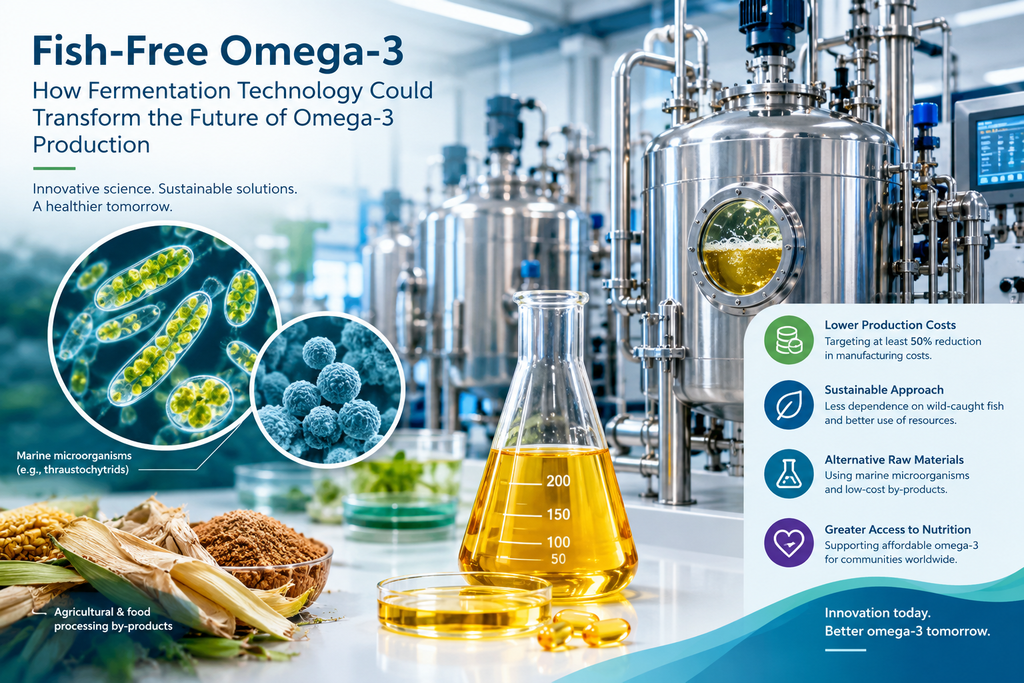
A research project led by Southern Cross University (SCU) in Australia is investigating whether marine microorganisms can be cultivated using lower-cost raw materials to produce omega-3 oils. The initiative aims to reduce production costs by at least 50%, potentially making omega-3 nutrition more accessible to communities where affordability remains a significant challenge.
For the global omega-3 industry, this development highlights the growing importance of alternative production technologies alongside conventional marine oil processing.
1. Why Is the Omega-3 Industry Exploring Alternatives to Fish Oil?
Omega-3 fatty acids, particularly eicosapentaenoic acid (EPA) and docosahexaenoic acid (DHA), are important ingredients in nutritional supplements, functional foods, and specialized nutrition products.
Traditionally, marine fish oil has been one of the principal commercial sources of EPA and DHA. However, the industry must manage several challenges associated with marine resources, including raw material availability, production costs, supply fluctuations, and long-term sustainability.
As demand for omega-3 ingredients continues to evolve, manufacturers are exploring additional ways to produce these valuable fatty acids.
Alternative production technologies could help diversify the supply chain and reduce dependence on a single source of marine raw materials.
2. Understanding Fish-Free Omega-3 Production
One of the most interesting aspects of omega-3 science is that fish are not the original producers of all the omega-3 fatty acids they contain.
Marine microorganisms play an important role in the marine food chain, and omega-3 fatty acids produced by these organisms can accumulate in other marine life.
Scientists are using this biological relationship to develop alternative production methods.
Instead of extracting omega-3 oil from fish, researchers can cultivate certain microorganisms under controlled conditions and harvest the oils they produce.
This approach could create a complementary source of omega-3 ingredients without relying directly on fish as the raw material.
Importantly, fish-free omega-3 does not necessarily mean plant-derived omega-3. Some production methods use marine microorganisms, including microalgae and related organisms, to generate long-chain fatty acids such as DHA.
3. Precision Fermentation: A Promising Production Technology
Precision fermentation is an emerging approach that uses controlled cultivation processes to produce specific biological products.
In omega-3 manufacturing, researchers can cultivate suitable microorganisms under carefully managed conditions to encourage oil production.
The Southern Cross University research team is investigating marine microorganisms known as thraustochytrids, which can produce omega-3-rich oils.
The project explores whether agricultural and food-processing by-products can replace more expensive feedstocks used to grow these microorganisms.
If successful, this strategy could help reduce the cost of producing omega-3 ingredients while supporting more efficient resource utilization.
Potential advantages of fermentation-based production include:
- Controlled manufacturing: Production takes place under managed conditions.
- Alternative raw materials: Suitable agricultural and food-processing by-products may help reduce feedstock expenses.
- Supply diversification: Manufacturers could gain access to an additional source of omega-3 oils.
- Scalability potential: Fermentation systems may offer opportunities to expand production as demand increases.
- Reduced direct dependence on fish: Microbial production could complement conventional marine oil extraction.
However, commercial success will depend on production efficiency, the quality and composition of the resulting oil, processing costs, and the ability to scale the technology economically.
4. Can Fish-Free Omega-3 Production Reduce Manufacturing Costs?
Production cost is one of the major factors influencing the accessibility of nutritional ingredients.
In its report published on October 27, 2026, LabOnline described the Southern Cross University project’s objective of reducing omega-3 supplement production costs by at least 50%.
A key research question is whether lower-cost agricultural and food-processing by-products can provide the nutrients required for microbial growth without compromising productivity.
Reducing feedstock expenses could improve the economics of fermentation-based production.
Nevertheless, achieving lower raw material costs alone may not guarantee cheaper finished omega-3 oil. Manufacturers must also account for fermentation infrastructure, energy consumption, oil recovery, purification, quality testing, and other processing expenses.
The research therefore represents an important step toward evaluating whether microbial omega-3 production can become more commercially competitive.
The proposed 50% reduction is a research target, not a confirmed industry-wide cost saving.
5. Why DHA Production Matters for Maternal and Infant Nutrition
DHA is an important structural fatty acid in the human brain and retina. Adequate omega-3 nutrition is particularly relevant during pregnancy and early childhood development.
The Southern Cross University project places particular emphasis on making omega-3 supplements more affordable for pregnant women and infants in low-income countries.
According to the report, the research is investigating whether lower-cost production could help address financial barriers to omega-3 supplementation.
If the technology proves commercially viable, it could contribute to efforts to improve access to nutritional ingredients for specialized applications, including maternal and infant nutrition.
However, the potential health benefits of any finished product will depend on its composition, quality, appropriate use, and supporting clinical evidence. A new manufacturing method alone does not establish a specific health outcome.
6. Sustainability and the Future of Omega-3 Supply Chains
Sustainability is becoming an increasingly important consideration for marine ingredient manufacturers.
Conventional fish oil production depends on marine raw materials, making resource availability and responsible sourcing important industry priorities.
Fermentation-based production could offer another pathway by cultivating omega-3-producing microorganisms on land rather than relying directly on fish catches.
The potential environmental benefits will depend on several factors, including the energy required for production, the origin of feedstocks, water consumption, waste management, and the efficiency of the overall manufacturing process.
Using suitable food-processing by-products could also support more efficient resource utilization, provided those materials can be processed safely and consistently.
Rather than viewing microbial oils and conventional fish oils as mutually exclusive, the industry may benefit from developing a diversified portfolio of omega-3 sources.
Such diversification could help manufacturers respond to changing demand, raw material availability, and sustainability expectations.
7. What Does This Development Mean for Omega-3 Manufacturers?
The development of fish-free omega-3 technologies signals a broader shift toward innovation in lipid production.
For manufacturers of omega-3 ingredients, several industry developments deserve attention.
Diversification of Raw Material Sources
Microbial oils could provide an additional source of DHA and potentially other omega-3 fatty acids, depending on the microorganism and production process.
Advances in Manufacturing Technology
Improved fermentation methods and more economical feedstocks could create new opportunities for producing specialized nutritional oils.
Greater Emphasis on Quality
Alternative sources will still require appropriate testing for fatty acid composition, oxidation, contaminants, stability, and other relevant quality parameters.
New Opportunities in Specialized Nutrition
Microbial DHA oils may be particularly relevant to applications requiring specific fatty acid profiles or alternative sourcing options.
Continued Importance of Conventional Fish Oil
Traditional marine oils remain an important part of the global omega-3 supply chain. Their future role will depend on raw material availability, processing capabilities, product requirements, and commercial considerations.
For established omega-3 manufacturers, the emergence of alternative technologies reinforces the importance of process innovation, reliable sourcing, and consistent product quality.
8. Will Fish-Free Omega-3 Replace Conventional Fish Oil?
Not necessarily.
Fish-free omega-3 production is a promising area of research, but its long-term commercial impact remains to be established.
Several factors will influence adoption, including manufacturing costs, production capacity, the concentration of EPA and DHA, regulatory requirements, customer acceptance, and suitability for different applications.
Microbial oils may offer advantages in selected applications, particularly where a specific fatty acid profile or alternative sourcing method is required.
Conventional fish oil will also continue to serve important markets, including products that require particular combinations or concentrations of EPA and DHA.
The most likely direction is the development of a more diversified omega-3 industry in which different production technologies serve different market requirements.
For ingredient manufacturers and buyers, understanding the capabilities and limitations of each source will be essential when making long-term sourcing decisions.
Conclusion: Innovation Is Expanding the Future of Omega-3 Production
Research into fish-free omega-3 production demonstrates how biotechnology could complement established marine oil manufacturing methods.
The Southern Cross University project is investigating whether precision fermentation and lower-cost feedstocks can make omega-3 production more affordable, with a particular focus on improving access to essential nutrition.
If the research achieves its objectives, it could create new opportunities for supply diversification, manufacturing innovation, and specialized omega-3 applications.
At the same time, commercial adoption will depend on demonstrating consistent quality, production efficiency, scalability, and economic viability.
For the global omega-3 industry, the key takeaway is clear: the future of omega-3 production may depend on a combination of responsible marine sourcing, advanced purification technologies, and innovative alternative production methods.
At Nutragen Bio Actives, we recognize the importance of quality, innovation, and reliable sourcing in the evolving omega-3 ingredients industry. As production technologies advance, continued attention to ingredient quality and manufacturing standards will remain essential to meeting the needs of customers worldwide.
Source: LabOnline, Research project to produce fish-free omega-3, published October 27, 2026.