
Introduction
Omega-3 fatty acids are essential nutrients that play an important role in human health and marine ecosystems. Two of the most important marine omega-3 fatty acids are EPA (eicosapentaenoic acid) and DHA (docosahexaenoic acid), widely used in nutritional supplements, functional foods and pharmaceutical applications.
However, climate change is emerging as a potential challenge for the future availability and nutritional quality of marine omega-3 sources. Rising ocean temperatures can affect the fatty acid composition of marine organisms, potentially influencing the nutritional value of fish and the raw materials used in fish oil production.
Recent research highlights why ocean health, responsible fisheries management and reliable sourcing are becoming increasingly important for the global omega-3 industry.
How Ocean Warming Can Affect Omega-3 Fatty Acids
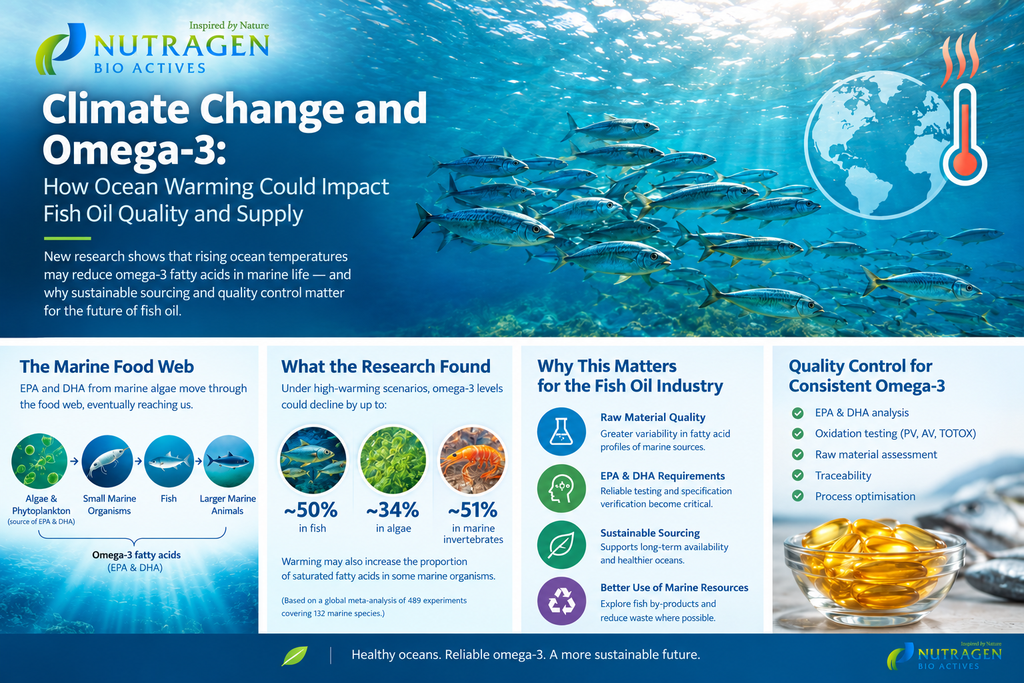
Marine ecosystems depend on a complex food web. Microscopic algae and phytoplankton form the foundation of this system, supplying essential nutrients to small marine organisms, which are then consumed by fish and larger marine animals.
EPA and DHA produced by marine algae can move through this food web, eventually reaching humans through seafood consumption.
When ocean temperatures rise, marine organisms must adapt to changing environmental conditions. These adaptations can alter their cell membrane composition, including the balance between omega-3 and saturated fatty acids.
As a result, warmer waters may affect not only the survival and distribution of marine species but also their nutritional composition.
What Does the Research Say?
A global meta-analysis published in Global Change Biology examined 489 experiments covering 132 marine species, including algae, invertebrates and fish.
The researchers found that warming was associated with reductions in omega-3 fatty acids across marine organisms. Under the most extreme warming scenarios assessed, omega-3 levels could decline by up to approximately:
- 50% in fish
- 34% in algae
- 51% in marine invertebrates
The study also found that warming could increase the proportion of saturated fatty acids in some marine organisms.
These figures represent potential outcomes under high-warming experimental scenarios, not a prediction that all fish species will experience the same reductions. The actual impact will vary depending on the species, environmental conditions and degree of warming.
Ocean acidification had a smaller overall effect on fatty acid levels in the studies analysed, although the available evidence was more limited.
Why This Matters for the Global Fish Oil Industry
1. Raw Material Quality and Variability
Fish oil manufacturers depend on marine raw materials with suitable fatty acid profiles. If climate change alters the nutritional composition of fish and other marine organisms, the industry may face greater variability in raw material characteristics.
This makes appropriate raw material selection, laboratory analysis and batch-level quality control increasingly important.
2. EPA and DHA Concentration Requirements
Different applications require different EPA and DHA concentrations. Manufacturers serving dietary supplement, food and pharmaceutical customers must maintain reliable specifications and verify product composition through appropriate testing.
Changes in the natural fatty acid composition of raw materials could increase the importance of careful sourcing, processing and analytical verification.
3. Sustainable and Responsible Sourcing
Climate change adds to existing pressures on marine resources, including overfishing and ecosystem degradation.
Responsible sourcing, traceability and effective fisheries management can help support the long-term availability of marine ingredients. Collaboration across the seafood and fish oil value chains will be important in responding to these challenges.
4. Improving the Utilisation of Marine Resources
The research also highlights opportunities to make better use of fish-processing by-products that might otherwise be discarded.
Where technically suitable, safe and compliant with applicable regulations, these materials can be evaluated for recovery of valuable nutrients, including omega-3 fatty acids.
Improved utilisation can support resource efficiency while reducing avoidable waste. However, the suitability of each material must be established through quality, safety and processing assessments.
The Role of Quality Control in Omega-3 Manufacturing
As the marine environment changes, maintaining consistent product quality remains essential for fish oil manufacturers.
A comprehensive quality management approach may include:
- EPA and DHA analysis: Verifying fatty acid composition against product specifications.
- Oxidation testing: Monitoring parameters such as peroxide value (PV), anisidine value (AV) and total oxidation value (TOTOX), where applicable.
- Raw material assessment: Evaluating incoming oil for quality, purity and suitability for the intended application.
- Traceability: Maintaining appropriate records of raw materials, suppliers and production batches.
- Process optimisation: Applying suitable purification and concentration technologies to meet the required product specifications.
These measures help manufacturers assess raw material variability and deliver fish oil products that meet customer requirements. Processing can improve or concentrate selected components, but it cannot eliminate the need for sustainable sourcing or guarantee that every raw material will provide the same yield.
Looking Ahead: Building Resilience in the Omega-3 Supply Chain
The future of the omega-3 industry will depend on more than production capacity alone. Marine ecosystem health, responsible resource management, reliable sourcing and rigorous quality assurance will all contribute to long-term supply resilience.
For manufacturers, ingredient suppliers and customers, understanding these environmental changes can support better planning and informed sourcing decisions.
Continued scientific research will be important to clarify how warming affects different species under real-world conditions and how these changes may influence the availability and nutritional composition of marine ingredients.
Conclusion
Climate change presents a potential long-term challenge for marine omega-3 availability and nutritional quality. Research indicating that warming may reduce EPA and DHA across different levels of the marine food web reinforces the importance of protecting marine ecosystems and managing resources responsibly.
For the fish oil industry, the way forward includes sustainable sourcing, improved utilisation of marine resources, careful raw material evaluation and strong quality control.
At Nutragen Bio Actives, we recognise the importance of quality, consistency and responsible practices in the omega-3 value chain. As the industry evolves, science-led decision-making and reliable supply partnerships will remain important for meeting the changing needs of global customers.
Source: Dawson, B. R., Mellin, C., and Mantzioris, E. (2026). The Effects of Ocean Warming and Acidification on Fatty Acid Contents of Marine Organisms: A Global Meta-Analysis. Global Change Biology. DOI: 10.1111/gcb.71056.