
Peru’s decision to cancel its second anchovy fishing season of 2026 is raising concerns across the global seafood industry. With reduced raw material availability, fish oil and fishmeal producers face increasing supply pressure, while the effects could extend to aquaculture feed costs, Atlantic salmon production, and the wider omega-3 supply chain.
For businesses involved in fish oil manufacturing, nutritional ingredients, and aquaculture, this development highlights the importance of reliable sourcing and long-term supply planning.
1. Why Did Peru Cancel Its Second Anchovy Fishing Season?
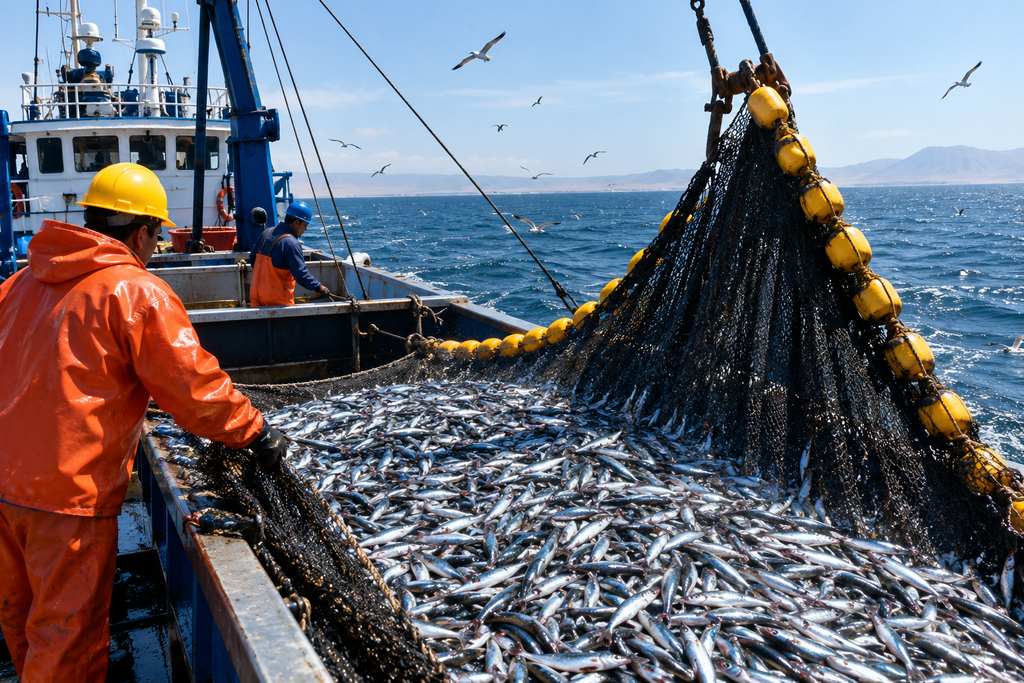
Peru is one of the world’s most important producers of anchovy-based fishmeal and fish oil. Its North-Central anchovy fishery supplies a significant share of the raw materials used by the global marine ingredients industry.
In October 2026, Peru officially confirmed that its second North-Central anchovy fishing season would not proceed. The decision followed assessments indicating unfavourable biological and oceanographic conditions.
According to reporting by SeafoodSource, the fishery had already experienced a difficult first season in 2026, when fishing activity was disrupted by challenging sea conditions associated with El Niño.
Several factors contributed to the cancellation:
- Warmer ocean temperatures: El Niño-related conditions affected the distribution and availability of anchovies.
- A high proportion of juvenile fish: Surveys indicated that young anchovies represented a substantial share of the population.
- Reduced fish biomass: Assessments showed lower anchovy biomass than earlier in the year.
- Sustainability concerns: Authorities prioritised protecting the fish population and preserving its ability to recover.
The cancellation demonstrates how environmental conditions and responsible fisheries management can directly influence the availability of marine raw materials.
2. How Will the Cancellation Affect Global Fish Oil Supply?
Fish oil production depends heavily on the availability of suitable marine raw materials. When anchovy catches decline, processors may face reduced production volumes, increased procurement competition, and greater uncertainty about future supplies.
Peru typically accounts for approximately 20% of global fishmeal and fish oil production in an average year, making disruptions in its fishery particularly significant.
The International Marine Ingredients Organization (IFFO) has reported substantial year-to-date declines in global fish oil and fishmeal production during 2026, with reduced availability in Peru being a major contributing factor.
The loss of the second anchovy season could intensify these pressures.
Potential consequences for fish oil manufacturers
Reduced raw material availability
Processors may have fewer opportunities to source anchovy-derived oils, making procurement planning more difficult.
Increased competition among buyers
Fish oil manufacturers, aquaculture feed producers, and other marine ingredient buyers may compete more aggressively for available material.
Greater price volatility
When supply tightens, market prices can become more sensitive to changes in production, demand, inventory levels, and shipping conditions.
Longer-term sourcing uncertainty
Companies relying heavily on a single geographical source may face greater exposure to seasonal disruptions.
However, the final impact will depend on production in other fishing regions, available inventories, alternative raw materials, and demand across different market segments.
3. Could Fish Oil Prices Increase Further?
The cancellation creates conditions that could put additional upward pressure on fish oil prices.
When raw material availability decreases, producers may need to adjust purchasing strategies, production schedules, and selling prices to reflect higher input costs.
Several factors will influence how the market responds:
- The availability of anchovy and other suitable marine raw materials.
- Fish oil production levels in Chile and other producing countries.
- Existing inventories held by manufacturers and distributors.
- Demand from aquaculture, dietary supplement, and pharmaceutical ingredient markets.
- International shipping costs and supply chain disruptions.
- The availability and commercial suitability of alternative omega-3 sources.
It is important to distinguish between market risk and confirmed price movements. Although reduced supply can support higher prices, actual price changes will depend on the balance between supply and demand.
For buyers, this makes regular market monitoring and early procurement planning particularly valuable.
4. What Does This Mean for Atlantic Salmon Prices?
The connection between Peru’s anchovy fishery and Atlantic salmon prices may not be immediately obvious, but the two markets are linked through aquaculture feed.
Farmed Atlantic salmon require feed formulated with appropriate levels of protein, energy, essential fatty acids, and other nutrients.
Fishmeal provides valuable protein, while fish oil supplies long-chain omega-3 fatty acids, including EPA and DHA.
If fishmeal and fish oil become more expensive, salmon feed manufacturers may experience higher production costs.
These increases could eventually affect salmon farming economics and market prices.
However, higher fish oil prices do not automatically translate into higher salmon prices.
The actual outcome will depend on several additional factors:
- Salmon farming volumes and harvest schedules.
- Demand in major seafood markets.
- Feed manufacturers’ ability to manage ingredient costs.
- The use of alternative feed ingredients.
- Production costs in Norway, Chile, and other salmon-producing countries.
- Inventory levels and international trade conditions.
The cancellation should therefore be viewed as a potential source of cost pressure rather than a guarantee of immediate salmon price increases.
5. Why Omega-3 EPA and DHA Supply Chains Need Attention
The implications extend beyond aquaculture.
Fish oil is an important raw material for manufacturers producing concentrated omega-3 ingredients for dietary supplements, nutritional products, and pharmaceutical applications.
The availability of suitable crude fish oil can influence the cost and planning of downstream processing operations.
For manufacturers working with EPA- and DHA-rich oils, several considerations become increasingly important during periods of supply uncertainty.
Raw material quality
Not all crude fish oils are interchangeable. Fatty acid composition, free fatty acid levels, oxidation indicators, colour, odour, and other quality parameters influence suitability for different applications.
Production planning
Uncertain raw material availability can affect refining schedules, production capacity, and delivery commitments.
Procurement flexibility
Developing relationships with multiple qualified suppliers and monitoring different sourcing regions can help businesses respond to changing market conditions.
Quality assurance
Supply shortages should not compromise product specifications, traceability, or quality-control requirements. Incoming materials should continue to meet the appropriate technical and safety standards.
For the omega-3 industry, dependable sourcing must be supported by consistent quality evaluation and careful production planning.
6. Can Other Sources Help Offset Peru’s Reduced Supply?
Other producing regions may help moderate the effects of reduced Peruvian output, although replacing the lost production entirely may be difficult.
Chile is another important producer of marine ingredients, while several countries in Europe and other regions contribute to global fishmeal and fish oil supplies.
However, production levels vary according to fishing seasons, species availability, environmental conditions, regulations, and competing demand.
Alternative sources of omega-3 ingredients may also help diversify supply.
These include:
- Fish oils produced from other suitable marine species.
- Algal oils containing EPA, DHA, or both, depending on the source.
- Other approved feed ingredients that can partially replace conventional marine ingredients in suitable formulations.
Each alternative has its own nutritional, technical, commercial, and sustainability considerations.
For manufacturers, diversification should be based on product requirements, validated specifications, regulatory compliance, and reliable supplier qualification rather than price alone.
7. Sustainability and Responsible Fisheries Management
Although the cancellation creates commercial challenges, it also highlights the importance of sustainable fisheries management.
When scientific assessments identify a high proportion of juvenile fish or unfavourable environmental conditions, limiting fishing activity can help protect the reproductive capacity of the stock.
This is particularly important for anchovies, which play a significant role in marine food webs and support important commercial fisheries.
Responsible fisheries management must balance several objectives:
- Protecting fish populations and marine ecosystems.
- Maintaining long-term raw material availability.
- Supporting fishing communities and related industries.
- Ensuring the long-term viability of fishmeal and fish oil production.
In the short term, restrictions can reduce the supply available to processors. Over the longer term, effective management can help preserve the resource on which the industry depends.
Climate-related ocean changes also reinforce the need for better monitoring, flexible sourcing strategies, and continued investment in sustainable marine ingredients.
8. What Should Fish Oil Buyers and Manufacturers Do Now?
The current situation provides an opportunity for businesses across the omega-3 supply chain to review their sourcing and inventory strategies.
Practical steps include:
1. Monitor market developments
Follow updates on fishing seasons, raw material availability, fish oil production, and industry price trends.
2. Review inventory requirements
Assess current stocks, expected production volumes, customer commitments, and potential procurement gaps.
3. Diversify qualified suppliers
Where technically and commercially feasible, avoid excessive dependence on a single source or fishing region.
4. Maintain strict quality standards
Evaluate incoming raw materials against the required specifications, including fatty acid composition and oxidation parameters.
5. Strengthen supplier communication
Discuss availability, lead times, production schedules, and forward supply expectations with qualified suppliers.
6. Explore suitable alternatives
Evaluate other marine oils or algae-derived omega-3 ingredients where they meet the intended application’s technical and regulatory requirements.
These measures cannot eliminate market uncertainty, but they can help businesses make more informed purchasing and production decisions.
Conclusion: A Critical Moment for the Global Marine Ingredients Industry
Peru’s cancelled second anchovy fishing season of 2026 highlights the close relationship between ocean conditions, fisheries management, and global marine ingredient markets.
Reduced anchovy availability can put pressure on fishmeal and fish oil production, potentially increasing procurement costs and creating uncertainty for aquaculture feed manufacturers and omega-3 ingredient suppliers.
The effects on Atlantic salmon prices will depend on the broader balance between feed costs, production volumes, and seafood demand.
For fish oil manufacturers and buyers, the key priorities are clear: monitor market developments, maintain reliable sourcing relationships, protect quality standards, and plan procurement carefully.
As the global omega-3 industry navigates changing environmental and supply conditions, reliable sourcing and consistent product quality will remain essential to long-term business resilience.
About Nutragen Bio Actives
Nutragen Bio Actives focuses on fish oil ingredients for business-to-business applications. For manufacturers and ingredient buyers, understanding raw material availability, quality requirements, and supply chain developments is an important part of making informed sourcing decisions.
Visit our website to learn more about our fish oil ingredients and omega-3 solutions.