
Omega-3 fish oil is one of the most widely recognized marine-derived ingredients used in nutrition, nutraceutical and pharmaceutical products. But there is much more to fish oil than simply being a source of Omega-3.
From the marine food chain and the difference between EPA and DHA to advanced purification and molecular distillation, the science behind Omega-3 fish oil is fascinating.
Here are 15 interesting facts about Omega-3 fish oil that everyone—from consumers to nutraceutical professionals and bulk ingredient buyers—should know.
1. Omega-3 Is a Family of Fatty Acids
Omega-3 is not a single fatty acid.
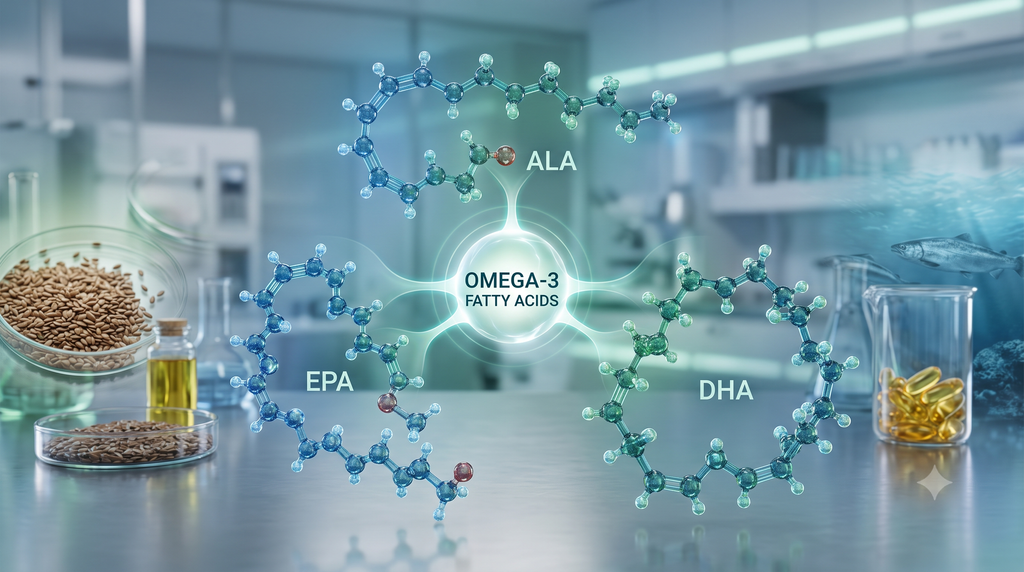
The term Omega-3 fatty acids refers to a family of polyunsaturated fatty acids. The three commonly discussed Omega-3s are:
- ALA – Alpha-Linolenic Acid
- EPA – Eicosapentaenoic Acid
- DHA – Docosahexaenoic Acid
ALA is primarily found in plant sources such as flaxseed and certain vegetable oils, while EPA and DHA are commonly associated with marine sources such as fish and fish oil.
2. Fish Don’t Simply “Make” All Their Omega-3
Here’s a surprising fact: the Omega-3 found in marine fish is closely connected to the marine food chain.

Marine microorganisms, particularly certain algae and phytoplankton, are important primary sources of Omega-3 fatty acids in marine ecosystems.
Small marine organisms consume these sources, and Omega-3 fatty acids can then move through the food chain.
This is one reason why marine oils can be naturally rich in EPA and DHA.
3. EPA and DHA Are Not the Same
EPA and DHA are both Omega-3 fatty acids, but they have different molecular structures.
EPA contains 20 carbon atoms, while DHA contains 22.

Their different structures mean they are biologically distinct fatty acids and can have different roles in the body.
For commercial fish oil products, the actual EPA and DHA concentration is therefore an important specification.
4. DHA Is Particularly Abundant in the Brain and Retina
DHA is an important structural fatty acid found in tissues such as the brain and retina.
This is one reason DHA receives significant attention in nutrition research.

However, it’s important to distinguish between the biological presence of a nutrient and making a specific health claim about a commercial fish oil product.
5. Crude Fish Oil Doesn’t Usually Look Like a Clear, Colorless Liquid
Many people imagine fish oil as a perfectly clear liquid.
In reality, crude fish oil can have noticeable color and contain various naturally occurring components.
Depending on its source and processing history, crude oil may contain:
- Free fatty acids
- Moisture
- Pigments
- Phospholipids
- Cholesterol
- Other non-target components
This is why refining and purification are important parts of modern fish oil manufacturing.
6. Fish Oil Can Be Highly Concentrated
Natural fish oil doesn’t always contain the same EPA and DHA concentration.
Through controlled processing and concentration technologies, manufacturers can produce oils with significantly higher levels of selected Omega-3 fatty acids.
For example, commercial Omega-3 concentrates can be manufactured to meet specific EPA/DHA specifications.
The exact concentration depends on the raw material and manufacturing process.
7. Molecular Distillation Plays an Important Role in Some Omega-3 Processes
Molecular distillation is an advanced separation technology used in certain fish oil purification and concentration processes.
It operates under high vacuum and controlled temperature conditions.
The technology can help manufacturers separate selected components and produce Omega-3 concentrates according to specific product requirements.
This is particularly relevant for manufacturers producing specialised EPA- or DHA-rich ingredients.
8. Oxidation Is a Major Quality Consideration
Here’s an important fact for anyone involved in fish oil manufacturing:
Omega-3 fatty acids are highly unsaturated and susceptible to oxidation.
Exposure to oxygen, heat and light can contribute to oxidation.
That’s why fish oil manufacturers pay close attention to:
- Processing conditions
- Temperature
- Oxygen exposure
- Storage
- Packaging
- Antioxidant systems where appropriate
- Quality testing
Good oxidation management is an important part of maintaining fish oil quality.
9. TOTOX Isn’t an Ingredient
You may have seen the term TOTOX on fish oil quality reports.
TOTOX stands for Total Oxidation and is calculated using peroxide value and anisidine value:
TOTOX = (2 × PV) + AnV
Where:
- PV = Peroxide Value
- AnV = Anisidine Value
So TOTOX isn’t something added to fish oil. It is a calculated quality indicator used to assess oxidation.
You can learn more in our detailed article:
Fish Oil Quality Testing: AV, PV & TOTOX Explained
10. Fish Oil Comes in Different Chemical Forms
Fish oil isn’t available in only one chemical form.
Commercial Omega-3 products may include:
Triglyceride (TG)
This is the natural form in which many fatty acids occur in fish oils.
Ethyl Ester (EE)
Ethyl ester fish oils are commonly produced during Omega-3 concentration processes.
Re-Esterified Triglyceride (rTG)
These are concentrated Omega-3 fatty acids converted back into a triglyceride form.
The appropriate form depends on the intended application and formulation requirements.
11. Not Every Fish Oil Has the Same EPA:DHA Ratio
Different fish oils can have different EPA and DHA profiles.
For example, one oil may contain approximately:
18% EPA + 12% DHA
while another concentrate may have a substantially different profile.
This is why buyers should always check the Certificate of Analysis (COA) and product specification rather than relying only on the term “fish oil.”
12. Fish Oil Is Used for More Than Softgels
When people hear “fish oil,” they often think of Omega-3 softgel capsules.
But fish oil and Omega-3 ingredients have many potential commercial applications, including:
- Nutraceutical products
- Dietary supplements
- Functional foods
- Nutrition products
- Pharmaceutical applications
- Specialty Omega-3 formulations
Different applications require different specifications, concentrations and forms.
13. Fish Oil Goes Through Much More Than One Processing Step
Modern fish oil manufacturing can involve multiple stages.
Depending on the product, the process may include:
Raw material selection → Oil recovery → Refining → Purification → Filtration → Deodorisation → Concentration → Quality testing → Packaging
Not every fish oil follows exactly the same process.
The processing sequence depends on the starting material and the specifications required for the finished product.
14. Quality Testing Starts Before the Finished Product
Quality control isn’t simply something performed at the end of production.
Manufacturers need to consider quality throughout the supply chain.
Important parameters can include:
- Raw material quality
- EPA and DHA profile
- Acid Value
- Peroxide Value
- Anisidine Value
- TOTOX
- Moisture
- Heavy metals
- Dioxins and PCBs, where applicable
- Microbiological parameters
- Stability and storage conditions
The exact testing program depends on the product, regulatory requirements and customer specifications.
15. “More Omega-3” Doesn’t Automatically Mean “Better”
This is perhaps one of the most important facts.
When comparing fish oils, looking only at the total Omega-3 percentage isn’t enough.
A professional buyer should consider:
EPA + DHA concentration + chemical form + oxidation status + purity + contaminant testing + stability + traceability + application requirements
A higher concentration may be desirable for a particular formulation, but the correct product depends on what the customer is trying to manufacture.
Why Understanding Fish Oil Quality Matters
For consumers, understanding Omega-3 can help them make more informed decisions.
For nutraceutical and pharmaceutical companies, the requirements are even more detailed.
A reliable fish oil supplier should be able to provide information about:
- Product specifications
- EPA and DHA concentration
- Chemical form
- Certificate of Analysis
- Quality testing
- Raw material sourcing
- Manufacturing process
- Packaging
- Storage
- Batch traceability
This becomes particularly important when purchasing bulk fish oil or concentrated Omega-3 ingredients.
From Marine Resources to High-Quality Omega-3
The journey of fish oil from marine raw material to a finished Omega-3 ingredient involves science, engineering and quality control.
Marine raw materials → Oil recovery → Refining → Purification → Concentration → Testing → Finished Omega-3 ingredient
Modern processing technologies allow manufacturers to develop fish oil ingredients with specific EPA and DHA profiles for different applications.
At Nutragen Bio Actives, we focus on the development and manufacturing of Omega-3 fish oil ingredients for nutraceutical and related applications.
Our product range includes different EPA and DHA fish oil specifications in both Ethyl Ester (EE) and Triglyceride (TG) forms.
Conclusion
Omega-3 fish oil may look like a simple ingredient, but the science and technology behind it are surprisingly complex.
From the marine food chain and the roles of EPA and DHA to oxidation control, molecular distillation, concentration and quality testing, every stage can influence the final product.
Whether you are a consumer, formulator, nutraceutical company or bulk ingredient buyer, understanding these facts can help you better evaluate Omega-3 fish oil products.
Interested in high-quality Omega-3 fish oil ingredients?
Explore our Fish Oil products or contact Nutragen Bio Actives to discuss your requirements.